
Dr. ONNICHA CHAISEKSAMPHAN
Pediatric Allergy and Immunology



When parents face situations where their child throws a tantrum, demanding toys or various activities, young children at this age are rapidly developing physically, cognitively, and emotionally. Understanding and handling these situations correctly is essential to sustainably promoting your little one's emotional development.
Children at this age do not yet have a complex understanding of language. Immediate situations can be handled by:
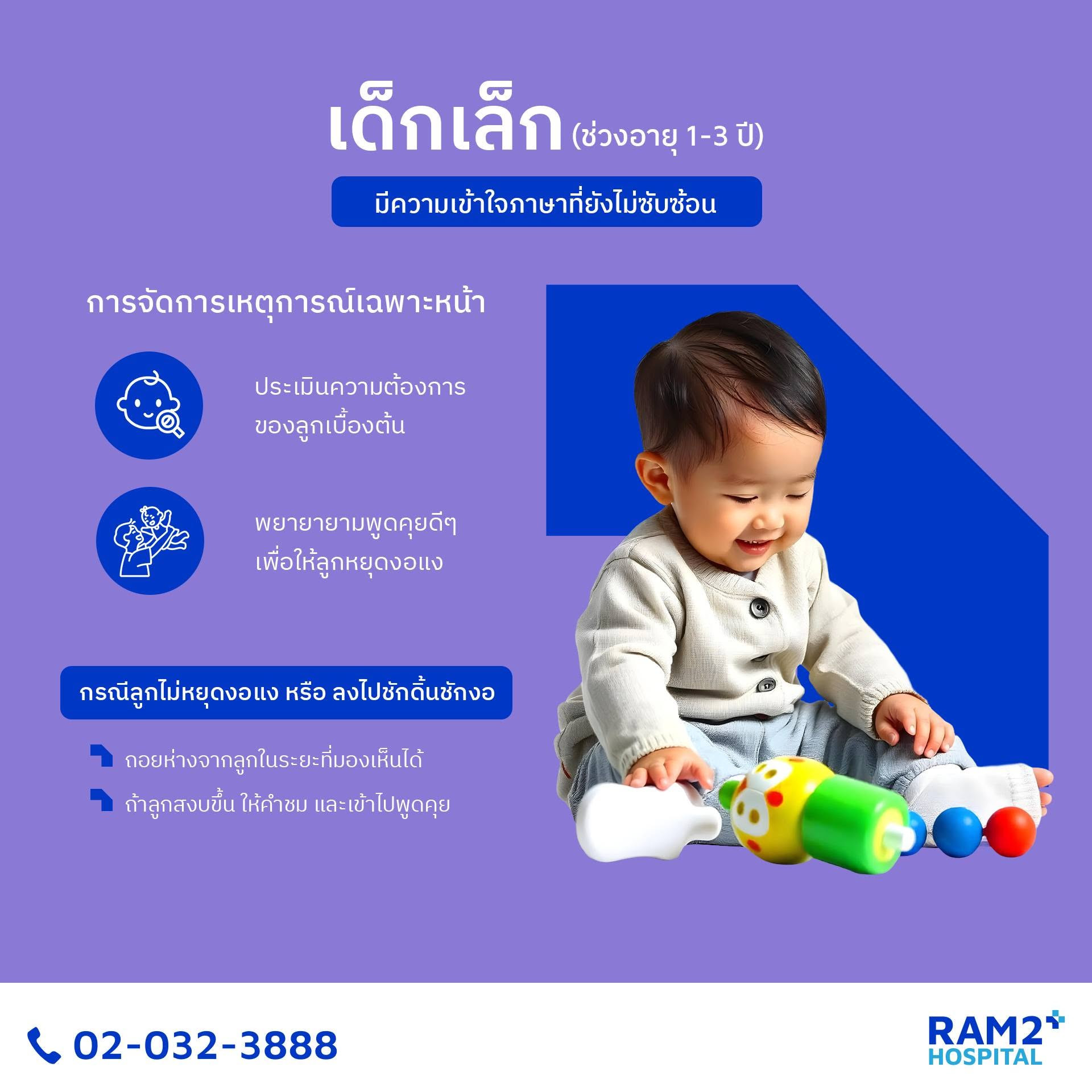
Children at this age have a more complex understanding of language. Immediate situations can be handled by:
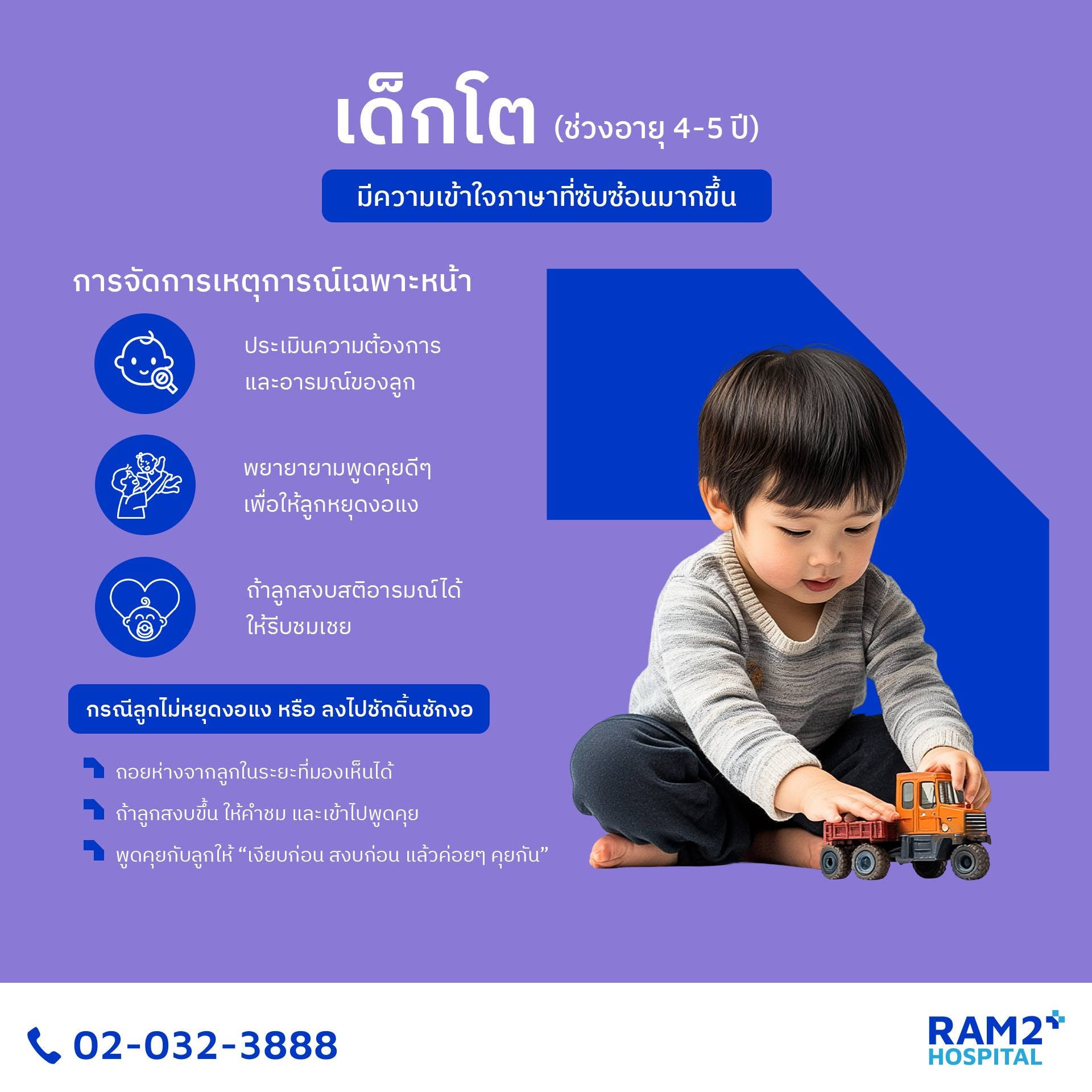
Discuss more complex conditions, such as teaching the child to use their own savings to buy items, or setting a clear budget from parents so they learn boundaries and reduce undesirable behaviors.
A1: First assess the safety of the location, then step back to a visible distance so as not to reinforce negative attention-seeking behavior. Wait until the child begins to calm down before approaching to talk using reason and a calm tone.
A2: Because setting clear rules and conditions in advance (such as rewards for keeping promises or budget limits) helps children learn boundaries and understand expectations better, reducing the likelihood of tantrums for items in the long run.
A3: If parents feel that tantrum behaviors are too severe to manage, occur with high frequency, or impact development and daily life, you can consult a pediatric developmental and behavioral specialist for additional appropriate guidance.
For more information, contact:
 Pediatric Department, 1st Floor, Ramkhamhaeng 2 Hospital
Email: information@ram2-hosp.com
Line Official: @ram2
Tel: 02-032-3888, 095-771-9739
Recommended Packages




Pediatric Allergy and Immunology

Radiotherapy and Oncology

Pediatric Endocrinology and Metabolism


