
Breast cancer remains one of the most common cancers among women globally and in Thailand, with its incidence steadily rising over the past two decades. It is a leading cause of cancer-related mortality in Thailand.
However, advances in medical technology, such as screening mammography, now enable earlier diagnosis.
Breast Cancer and Diverse Treatment Options
The integration of various treatment modalities—including surgery, chemotherapy, hormone therapy, and radiation therapy—significantly improves outcomes by reducing mortality and recurrence rates.
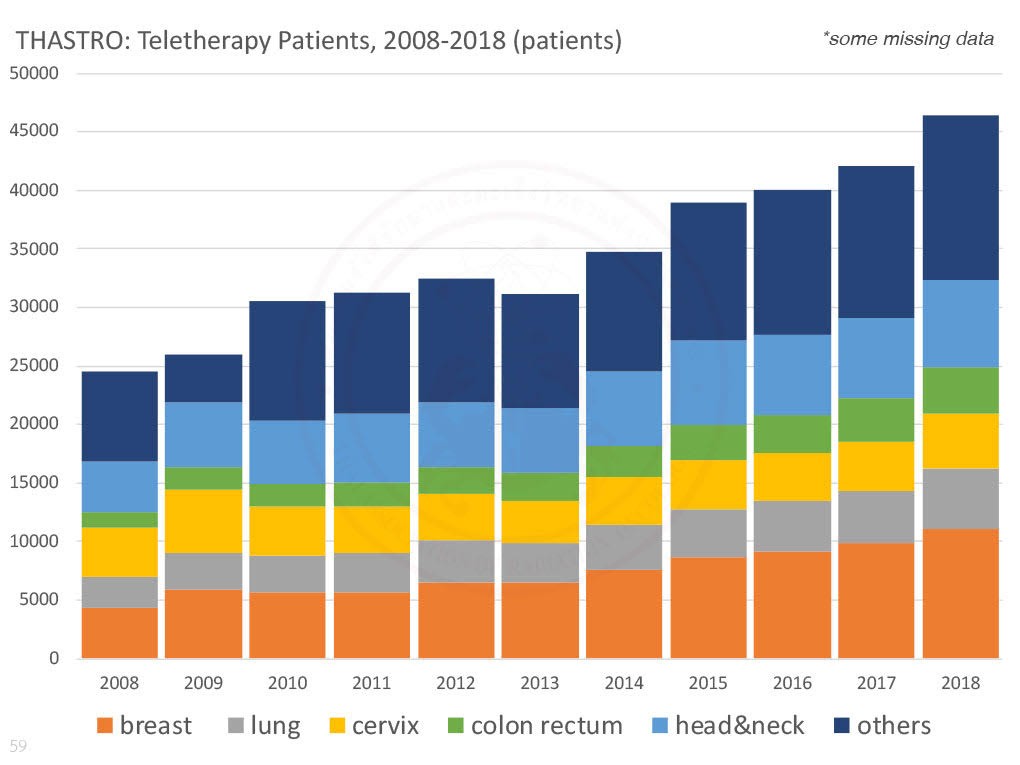
(For 10-year statistics on radiotherapy patients by disease, refer to the Thai Association of Radiation Oncology: https://www.thastro.org/Statistics-Online.php)
Causes and Risk Factors
Breast cancer develops from the abnormal growth of cells within breast tissue. Its true cause often results from a combination of genetic, hormonal, and environmental factors.
Key risk factors include
- Genetic Factors: Mutations in genes like BRCA1 and BRCA2 significantly increase cancer risk.
- Age: Risk increases with age, most commonly observed in women over 50.
- Menstrual History and Childbearing: First menstruation before age 12, late menopause, and first childbirth after age 30.
- Lifestyle: Risky behaviors such as obesity, lack of physical activity, high-fat diets, and excessive alcohol consumption.
- Hormone Replacement Therapy (HRT): Prolonged HRT use is linked to increased risk.
Breast Cancer Screening
Early detection of breast cancer is critical for improving treatment outcomes. Current screening guidelines in Thailand include:
- Annual clinical breast examination: for women aged 40 and above.
- Mammography every 1-2 years: for women aged 40 and above.
Common Symptoms and Manifestations
Breast cancer symptoms vary among individuals. Commonly observed signs include:
- A palpable lump in the breast or armpit.
- Changes in breast size, shape, or appearance.
- Skin changes such as dimpling, redness, or thickening.
- Nipple discharge, especially if blood-tinged.
- Nipple inversion or abnormalities, and localized breast pain.

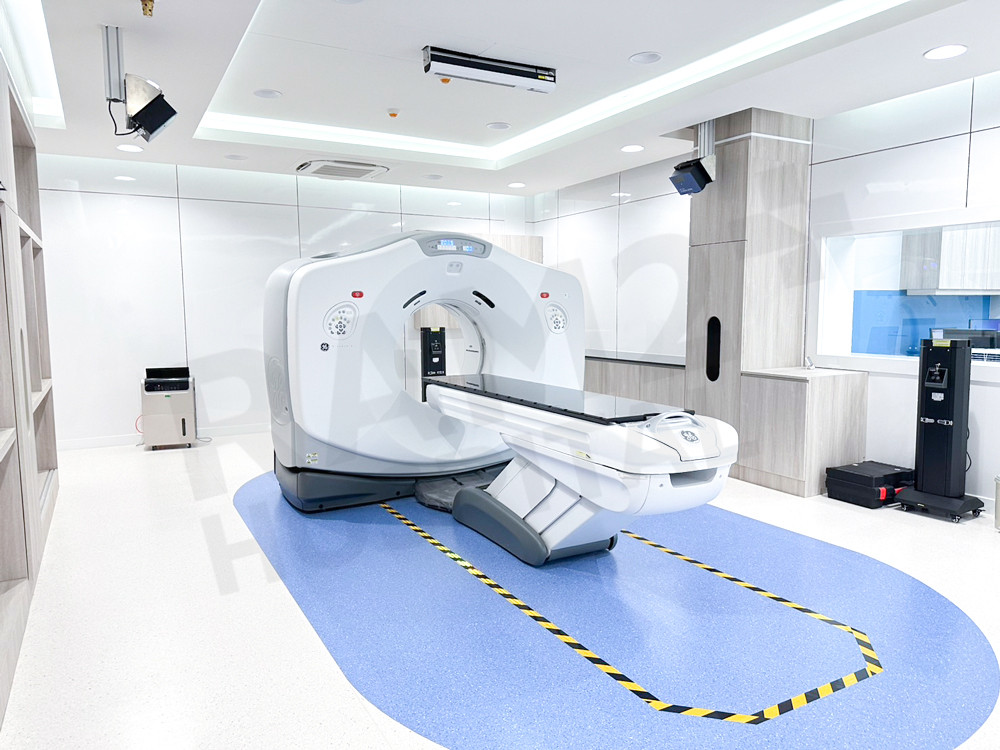
3D CT simulator for radiation therapy planning
Diagnosing Breast Cancer
Breast cancer diagnosis requires a comprehensive evaluation, including:
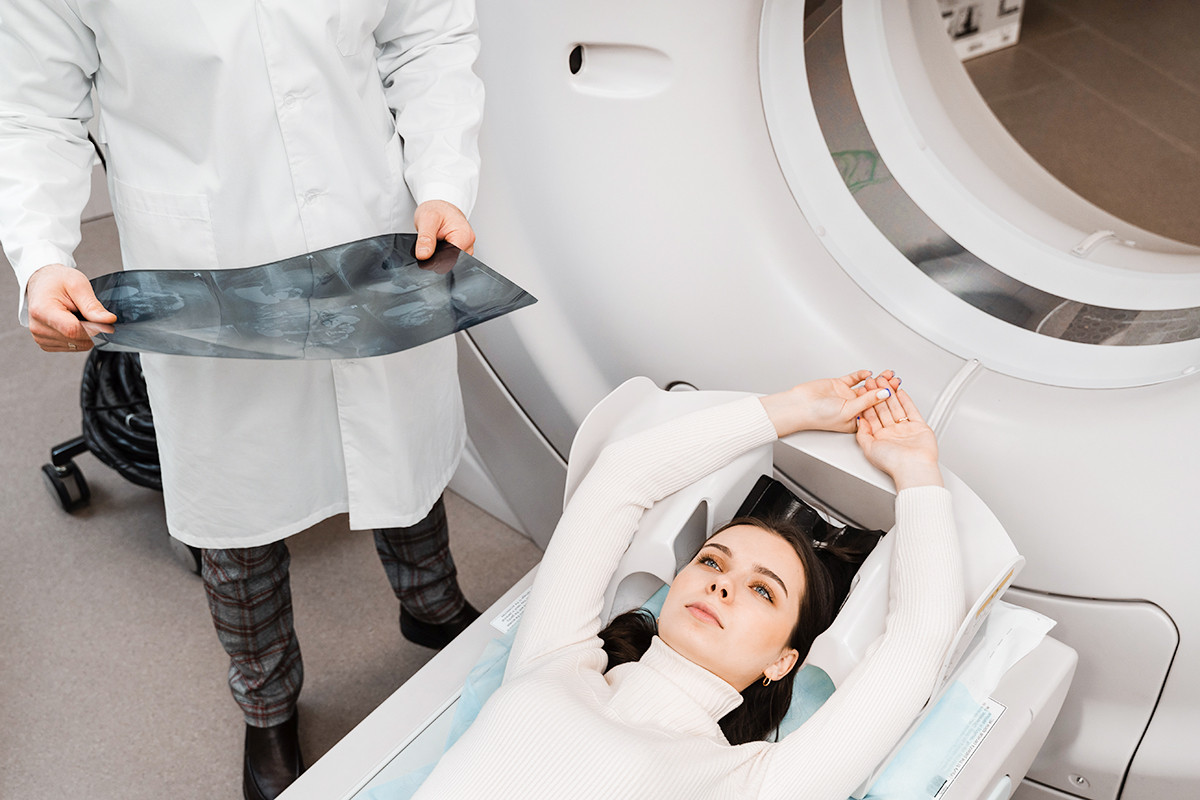
- Physical Examination: Detailed history taking and breast examination.
- Imaging Studies:
- Mammogram: Standard for early detection.
- Ultrasound: Suitable for individuals with dense breast tissue.
- MRI (Magnetic Resonance Imaging): Used for high-risk patients or when initial findings are inconclusive.
- Biopsy:
- Fine Needle Aspiration (FNA)
- Core Biopsy
- Excisional Biopsy
- Pathology and Molecular Studies:
- Testing for hormone receptor status (Estrogen Receptor - ER, Progesterone Receptor - PR) and HER2 to guide treatment planning.
- Staging Tests:
- CT scan or Bone scan to assess for disease metastasis.

Breast Cancer Treatment Guidelines
Breast cancer treatment depends on the disease stage and characteristics, with a multidisciplinary team approach being crucial.
1. Surgery
- Lumpectomy (Breast-Conserving Surgery): Removal of the tumor and surrounding tissue.
- Mastectomy: Removal of the entire breast; may include breast reconstruction when appropriate.
- Lymph Node Surgery: Biopsy or removal of axillary lymph nodes to assess disease spread.
2. Chemotherapy
- Used in early stages as adjuvant therapy (after surgery) or neoadjuvant therapy (before surgery).
- Used in advanced stages for disease control or palliative care.
3. Radiotherapy
- Post-Lumpectomy: Radiation significantly improves local control of residual breast tissue, achieving results comparable to mastectomy.
- Post-Mastectomy: Post-operative radiation, as medically indicated, reduces the risk of local recurrence.
- Lymph Node Involvement: Post-operative radiation, as indicated, enhances cancer control in both the breast and adjacent lymph nodes.
3. Hormone Therapy
- Effective for cancers that are Estrogen Receptor (ER) and Progesterone Receptor (PR) positive. Examples include tamoxifen or aromatase inhibitors.
4. Targeted Therapy
- Drugs like Trastuzumab and Pertuzumab are used for HER2-positive cancer patients to enhance treatment efficacy.
Summary
Breast cancer is a common disease with diverse risk factors. Appropriate screening and accurate diagnosis are critical for early detection, significantly improving treatment outcomes. Treatment approaches are multidisciplinary, encompassing surgery, chemotherapy, radiotherapy, hormone therapy, and targeted therapy.
For more information, please contact
4D Radiotherapy Center LINAC Center Building, Ramkhamhaeng 2 Hospital
Email: information@ram2-hosp.com
Line Official: @ram2
Tel: 02-032-3888
Recommended Package