
Dr. ALISARA CHAT-ISSARAWACH
Surgery


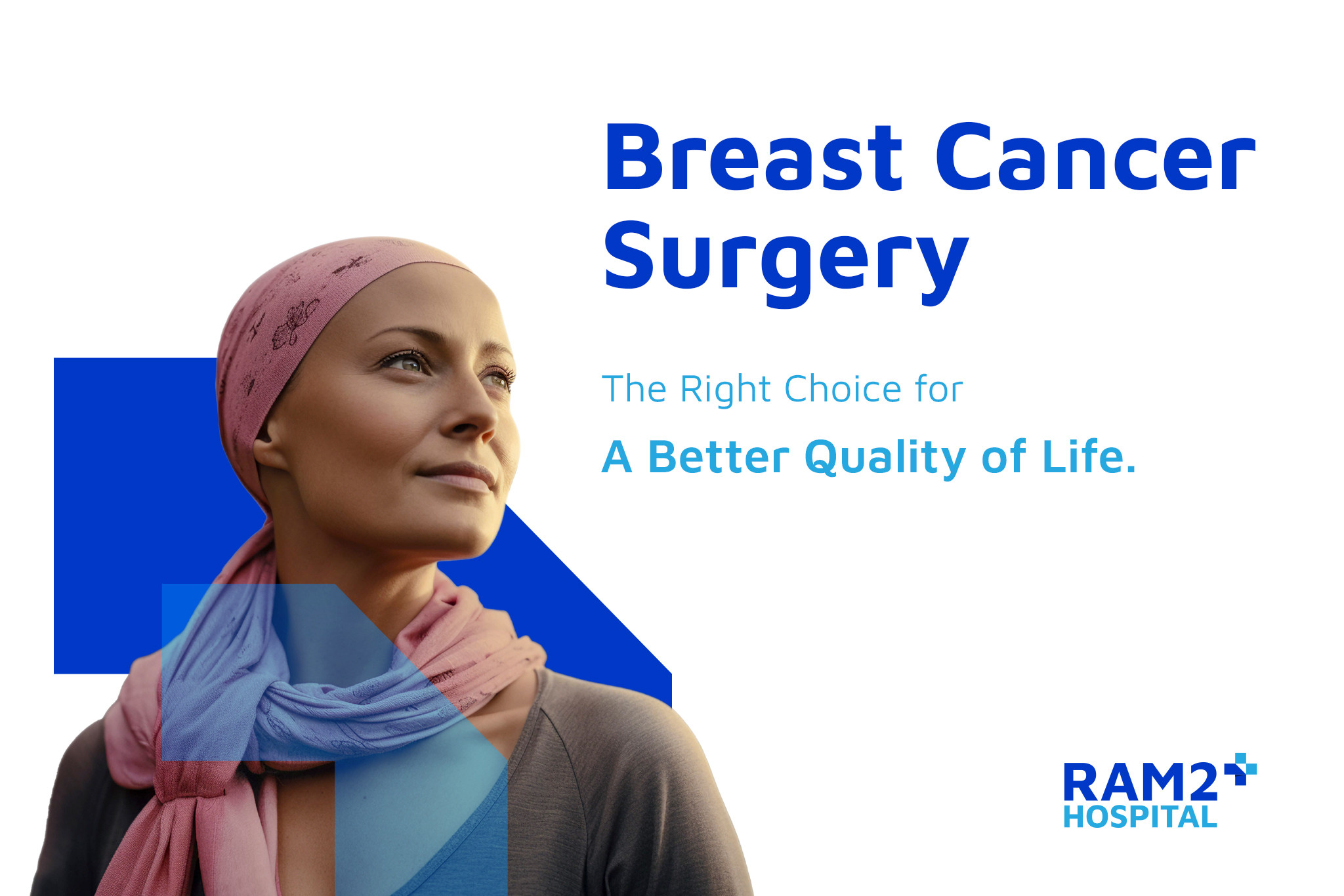
Breast cancer surgery (mastectomy) is one treatment option for patients in the early stages of breast cancer. Surgical options include a total mastectomy, where the entire breast is removed, and a partial mastectomy, which preserves most of the breast.
Survival rates for early-stage breast cancer patients undergoing total mastectomy are comparable to those who undergo partial mastectomy combined with radiation therapy. However, both methods have distinct advantages and disadvantages.
The choice of surgical method depends on individual patient factors, which are considered by the physician, such as:
This involves removing all breast tissue, including the nipple and areola. This method requires a wider incision to ensure complete removal of the breast tissue.
This involves removing the cancerous tumor and some surrounding breast tissue while preserving the natural shape of the breast. When combined with radiation therapy, recurrence rates are similar to total mastectomy.
This is performed after a total mastectomy to rebuild the breast. It is a safe option in terms of treatment and follow-up, with no increased risk of recurrence. Reconstruction can improve quality of life and appearance. There are two methods:
Tissue or muscle is transferred from areas like the abdomen or back. However, this procedure may reduce strength in the donor area or compromised muscle function.

In some cases, patients may require lymph node surgery to accurately stage breast cancer. This is particularly important for invasive ductal carcinoma or ductal carcinoma in situ (DCIS) treated with total mastectomy. Lymph node surgery includes sentinel lymph node biopsy or axillary lymph node dissection.
Breast cancer surgery offers various options, each with unique benefits and drawbacks. Consulting with a specialized breast surgeon is essential to determine the most suitable treatment method tailored to your individual needs.
For more information please contact:
 Breast Cancer Center, RAM2 Hospital
Email: information@ram2-hosp.com
Line Official: @ram2
Tel: 02-032-3888
Article by

Dr.Alisara Srinilta
Breast Cancer Surgery / Breast
RAM2 Hospital

Recommend Package

Surgery

รังสีรักษาและมะเร็งวิทยา (Radiotherapy and Oncology)

รังสีรักษาและมะเร็งวิทยา (Radiotherapy and Oncology)


