
Dr. RAPEEPAT AUEKITRUNGRUENG
Maternal and Fetal Medicine


Many people often get confused and think that "HIV infection" and "having AIDS" are the same thing. However, medically, these two terms have clearly different meanings and stages of disease. Having the right understanding not only helps reduce panic, but also helps people who have contracted the virus plan their self-care and enter the treatment process in a timely manner.
To summarize it as simply as possible:
That is, a person who gets the HIV virus into their body is called "a person living with HIV." At this stage, the immune level in the body may still be strong and no complications have occurred yet. However, if left untreated properly, the virus will keep replicating until it destroys a large number of white blood cells. When immunity drops to a critical point, the body can no longer resist common pathogens and begins to develop secondary infections called "opportunistic infections." This condition is what medicine calls entering the AIDS (AIDS) stage.
In the early stage of HIV infection, most infected people often show no obvious abnormal symptoms, or may only have flu-like symptoms that go away on their own, causing many people not to realize they have the virus in their body.
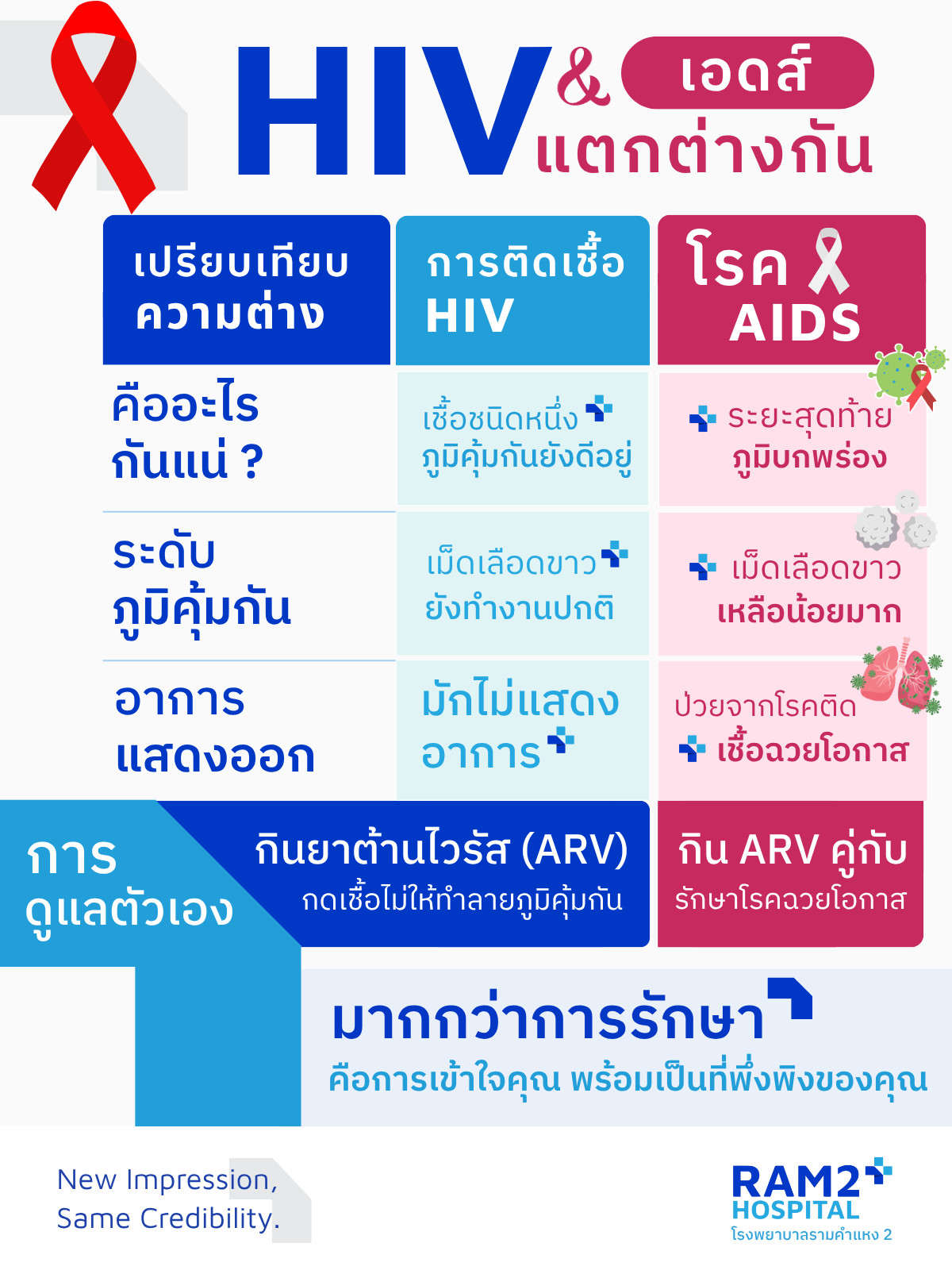
However, when the infection progresses to the AIDS stage, symptoms vary depending on the type of "opportunistic infection" that invades the body during immunodeficiency, such as:
A: Not necessarily. If the infected person is diagnosed early and takes antiretroviral medication (ARV) continuously and consistently, the medication will suppress viral replication, keeping the immune level strong. People living with HIV can therefore live their daily lives, work, and have a life expectancy close to that of the general population without progressing to the AIDS stage.
Q: What are opportunistic infections in people with AIDS ?
A: They are common pathogens found in the environment, such as tuberculosis bacteria, fungi, or certain bacteria, which normally a healthy immune system can eliminate on its own. However, when the immune system of someone living with HIV drops until entering the AIDS stage, these pathogens take the opportunity to cause severe illnesses such as pneumonia or meningitis.
On December 1 of every year, people around the world wear the "Red Ribbon" (Red Ribbon) symbol to show solidarity with people living with HIV and to remember those who have passed away. Ramkhamhaeng 2 Hospital joins the campaign to end discrimination and send encouragement to everyone, because "AIDS" is preventable, treatable, and we can live together in society.
Maternal and Fetal Medicine

เวชศาสตร์เชิงกรานสตรีและศัลยกรรมซ่อมเสริม ( Female Pelvic Medicine and Reconstructive Surgery )

รังสีรักษาและมะเร็งวิทยา (Radiotherapy and Oncology)
เวชศาสตร์มารดาและทารกในครรภ์ (Maternal and Fetal Medicine)